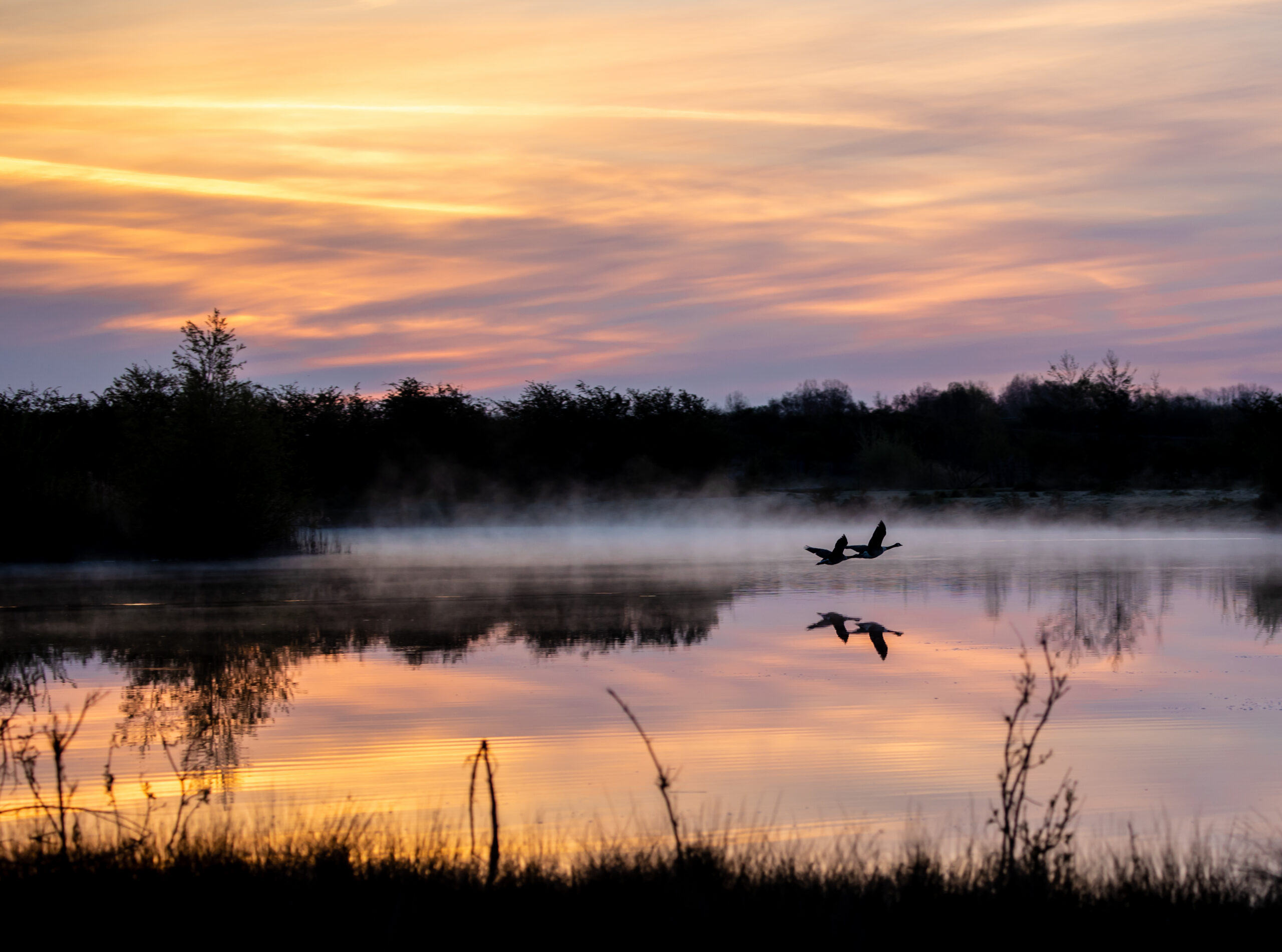
What role do hunters play in protecting wildlife and maintaining healthy ecosystems?
Hunters have contributed to wildlife conservation for generations through habitat restoration, responsible wildlife management, and conservation funding. Programs such as the Pittman-Robertson Act and Federal Duck Stamp help protect wetlands, restore wildlife habitats, support scientific research, and maintain public lands that benefit hunters and non-hunters alike.
Beyond financial contributions, regulated hunting helps manage wildlife populations, protect forest regeneration, and provide valuable information for monitoring diseases such as chronic wasting disease. Ethical hunting practices also reinforce the importance of respecting wildlife, following regulations, and preserving natural resources for future generations.
Drawing from personal hunting experiences, Black outdoor traditions, and the Black Heritage Hunt, the article highlights how hunting connects cultural heritage with environmental stewardship. Whether through purchasing a Federal Duck Stamp, visiting a wildlife refuge, volunteering for habitat restoration, or learning from experienced hunters, everyone has an opportunity to support wildlife conservation and healthier ecosystems.
Who takes care of the wild places?
Ask most people, and they’ll name park rangers, biologists, maybe the conservation groups whose stickers they see on car bumpers. All of them belong on that list, but there’s another group that has been caring for land and wildlife in this country for generations, and they’re rarely named in the answer: hunters.
October is when I feel this most. Across much of the country, fall seasons are opening or about to open. Marshes fill with the sound of wings before sunrise. Deer move more in the cooler air. Families who have hunted together for generations are pulling out their gear, checking their licenses, and scouting ground they know by heart. Sitting in that early cold, waiting for the light, I think about how much of what we all enjoy outdoors exists because people who hunt chose to invest in it. Birders, hikers, and families out for a Sunday drive benefit from that investment every day.
I want to walk through what that investment looks like because understanding it changes how you see a marsh, a forest, or a wildlife refuge. It also offers every one of us, whether we hunt or not, a way to take part.
A Tradition of Care
“In my family, hunting was part of how we lived with the land. Wild game came to our table with gratitude, and the lessons came along with it: pay attention to the seasons, follow the rules, take only what you need, and share what you bring home. I was learning stewardship long before I had a word for it.”
Black Americans have long carried that knowledge. In my book Nature Swagger, Jonathan Wilkins, founder of Black Duck Revival, writes about hunting and fishing the bayous of the Arkansas Delta, moving by boat and on muddy footpaths between the cypress and tupelo trees, and feeding his family from that country. J. Drew Lanham, the birder, naturalist, and hunter-conservationist, writes about sitting high in a tree stand and spending far more of his time watching hermit thrushes, winter wrens, and a red fox moving over fallen leaves than taking a deer.
What unites these stories is attention. Hunters who do this well spend hundreds of hours watching the land. They learn where the water sits after a hard rain, which oaks drop acorns first, and when the birds shift their flight lines. That knowledge is a form of care, and it has deep roots in our communities.
Following the Money to the Marsh
Here’s a piece of conservation history that surprises a lot of people. In 1937, Congress passed the Wildlife Restoration Act, better known as the Pittman-Robertson Act. It directs money from manufacturer taxes on firearms, ammunition, and archery equipment to state wildlife agencies. According to the U.S. Fish and Wildlife Service, those funds go toward projects that restore, conserve, manage, and enhance wild birds and mammals and their habitats, as well as hunter education, research, and public access to wildlife areas. For fiscal year 2026 alone, the final apportionment to the states and territories came to more than $842 million.
That money is at work in nearly every corner of the country. It helps pay for habitat restoration, wildlife research, and public land that everyone can visit, whether they carry a shotgun, a camera, or a picnic basket.
Then there’s the Federal Duck Stamp. Waterfowl hunters are required to buy one each year, and it has become one of the most successful conservation tools this country has ever created. According to the U.S. Fish and Wildlife Service, ninety-eight cents of every duck stamp dollar goes directly into the Migratory Bird Conservation Fund to buy or lease wetlands for the National Wildlife Refuge System. Since 1934, that fund has received some $1.3 billion and protected more than 6 million acres of habitat.
I have a personal connection to that stamp. In September 2023, I served as a judge for the Federal Duck Stamp Art Contest, held at the Olmstead Center at Drake University in Des Moines, Iowa. Ours was the first judging panel in the contest’s history made up entirely of women. We reviewed 199 entries, and the winning painting, an oil of a northern pintail by Montana artist Chuck Black, became the 2024-2025 Federal Duck Stamp. Pintails are a prized harvest in my region and are among the many duck species I look forward to each season. So seeing one chosen felt fitting! Studying those paintings, I kept thinking about where each stamp sold would send its dollars: into wetlands and refuge land that will outlast every one of us in that room.
Think about who uses those refuges: birders with binoculars, photographers, school groups, families walking a levee trail on a fall afternoon. Think about the ducks, geese, herons, and songbirds that live there. Hunters buy the stamp, and the whole community of life on that land gains from it.
Wetlands Saved by Duck Hunters
California offers a clear example. According to California Waterfowl, the state has lost about 95 percent of its historic wetlands, and much of what remains is still here because duck hunters saved it, dating back to the 1880s. The organization estimates that 60% of the managed wetlands in California sit on private property, and most of that land is owned and maintained by duck hunting clubs.
Sit with that for a moment. In one of the most developed states in the nation, a large share of the marsh that migrating birds depend on each winter exists because people who love to hunt ducks choose to flood fields, manage water, and keep that land wild.
I’ve spent early mornings in California marshes, and they’re some of the most alive places I know. Before dawn, you hear the birds long before you see them. Mallards, teal, and pintails trade back and forth overhead. The air smells of wet earth and cold water. When the sun finally clears the horizon, the whole place turns gold. Those wetlands work for the entire ecosystem, holding water, feeding migrating flocks along the Pacific Flyway, and sheltering countless other creatures. Hunters helped keep them on the map.
And the work continues. This year, California Waterfowl launched Heart of the Flyway, a multi-year campaign to restore wetlands and waterfowl populations while expanding hunting opportunities for people of all backgrounds, from first-timers to lifelong waterfowlers. The tradition of hunters as habitat builders is very much alive.
Balance in the Forest
“Healthy ecosystems depend on balance, and in many parts of the country, hunters help keep it.”
White-tailed deer are a good example. Where large predators are scarce and food is plentiful, deer numbers can grow beyond what the land can support. Researchers with the U.S. Forest Service have studied this for decades. A study of Allegheny hardwood forests in northwestern Pennsylvania found that browsing by white-tailed deer was a major cause of those forests failing to regenerate. Where deer densities were high, young trees were stunted, and the variety of tree species coming up narrowed.
When a forest can’t regrow, everything that depends on it feels the loss: the songbirds that nest in the understory, the wildflowers, the insects, and eventually the deer themselves, which face hunger and disease when the land is overbrowsed. Regulated hunting, guided by state biologists who set seasons and tag limits, is one of the main tools wildlife managers use to keep deer numbers in step with what the land can carry.
This is the part of the story I love to share with people who are new to hunting. Done responsibly, within seasons and limits set by science, hunting helps give the forest room to breathe.
Eyes and Ears on the Ground
Hunters also make up a vast network of observers. Every fall, they spend long hours in the field, and state wildlife agencies rely on what they bring back: harvest reports, field observations, and biological samples from the animals they take.
Those samples matter more every year. Chronic wasting disease is a neurological disease that affects deer, elk, moose, and caribou, and it continues to turn up in new places. Biologists depend on hunters to help track it. As MeatEater has reported, hunters can make a real difference by getting their animals tested, disposing of carcasses properly so the disease isn’t carried into new areas, and avoiding bait piles and attractants that bring deer together unnaturally. Test results from hunters help scientists understand where the disease is and how it spreads.
This is stewardship in its most practical form. A hunter who drops off a sample at a check station is contributing to the health of an entire herd and to the future of hunting for the next generation.
The Ethics That Make It Work
All of this rests on ethics, and the ethics of hunting run deep. Fair Chase principles are the gold standard: Respect for the animal. Knowing your target and what lies beyond it. Taking a clean shot or no shot at all. Using what you take or sharing it. Following the seasons and bag limits that let populations renew themselves year after year.
These principles are taught in hunter education courses, highlighted in clubs, and passed down in duck blinds and deer camps, from elders to young people, one season at a time. When I returned to hunting as an adult in California, it took study, mentors, and patience. I had to earn my license, learn the regulations, and practice safe firearm handling until it became second nature. That process deepened my respect for everyone who kept these traditions alive before me.
Why This Matters to Me
With my own hunting mentor, I co-founded the Black Heritage Hunt to welcome more people to the delicious variety of wild game cuisine and to the cultural legacy of hunting. The program weaves together food, history, and time outdoors, reconnecting participants with the traditional practices and flavors rooted in Black heritage, from the hunt itself to the table.
Over time, I’ve come to see the conservation story as part of that legacy too.
“Our ancestors hunted and fished with a close knowledge of the seasons and a deep responsibility to the land that fed them. Buying a duck stamp, submitting a sample, or volunteering on a wetland restoration day continues that same line of care.”
My mustang mare, True Haven, comes from the Twin Peaks Herd Management Area, public land that stretches across Lassen County, California, and Washoe County, Nevada. Caring for her keeps me close to real questions about how we share and steward wild places. Hunters, horsemen, ranchers, birders, and hikers all have a stake in healthy land. The more of us who understand how conservation is actually funded and carried out, the stronger our shared voice becomes.
And there’s joy in it.
“Few things compare to a table full of people sharing wild duck or venison while the person who brought it home tells the story of the morning. That table connects us to the marsh, to the forest, to the animal, and to one another.”
How You Can Take Part This Fall
- Buy a Federal Duck Stamp. At $25, it sends money directly to wetland habitats and doubles as an annual pass to national wildlife refuges that charge an entrance fee. You do not need to hunt to buy one. In fact, many enjoy adding them to their stamp collection.
- Visit a National Wildlife Refuge. The Refuge System includes 570 national wildlife refuges. Bring binoculars and see what those stamp dollars protect.
- Take a hunter education course. Even if you’re unsure whether you’ll hunt, the course teaches safety, ethics, and wildlife management in a way that deepens your understanding of the land.
- Find a mentor. If you’re ready to try, look for a mentored hunt through your state wildlife agency or a conservation group. Learning alongside experienced hunters makes all the difference.
- Try wild game. Ask a hunting friend to share their favorite recipes and preparation techniques, or look for a wild game dinner near you. Tasting the food is one of the best ways to connect with the full experience.
- Support the people doing the work. Volunteer for a wetland cleanup, a habitat planting day, set up a nesting bird box on your property, or participate in a citizen science project with your state wildlife agency.
Keepers of the Balance
When I settle in the duck blind before sunrise this season, listening for wing beats, I will be thinking about the long line of people who made that moment possible: the ones who paid for the marsh, flooded the rice fields, counted the birds, and taught the next generation how to do it right. Some of them looked like me, and many of their names were never written down.
Hunters have been keepers of the balance for a long time. The forests that regrow, the wetlands that fill each winter, and the refuges open to every family who wants to visit all carry their fingerprints.
This fall, I hope you’ll look at a marsh or a stand of oaks a little differently. Behind that view are generations of care, much of it paid for and carried out by people who hunt. Whether you pick up a license, buy a stamp, or simply sit down to a plate of venison with gratitude, there’s a place for you in this story. Come on out. The season is here.
Frequently Asked Questions (FAQs)
1. How does hunting help wildlife conservation and protect ecosystems?
Regulated hunting plays an important role in wildlife conservation by helping manage animal populations, protecting habitats, and supporting biodiversity. Hunting also generates funding for wildlife research, habitat restoration, and public access through licenses, permits, and federal excise taxes. When guided by scientific wildlife management and ethical practices, hunting can help maintain healthier ecosystems for wildlife and people alike.
2. How do hunters contribute to wildlife conservation funding?
Hunters help fund conservation through hunting licenses, equipment purchases, and programs such as the Pittman-Robertson Wildlife Restoration Act. This federal law directs excise tax revenue from firearms, ammunition, and archery equipment toward state wildlife conservation programs. These funds support habitat restoration, wildlife research, hunter education, and public lands, benefiting hunters and non-hunters alike.
3. What is the Federal Duck Stamp, and how does it support wetland conservation?
The Federal Duck Stamp is an annual stamp required for most waterfowl hunters aged 16 and older, but anyone can purchase one to support conservation. Ninety-eight cents of every dollar spent on Duck Stamps goes toward acquiring and protecting wetland habitats through the Migratory Bird Conservation Fund. These protected areas provide essential habitat for migratory birds and other wildlife while offering opportunities for outdoor recreation.
4. What role has hunting played in Black American history and culture?
Hunting has long been part of Black American traditions, connecting generations through food, family, cultural knowledge, and relationships with the land. From hunting and fishing in the rural South to preparing and sharing wild game, these practices have helped preserve cultural heritage and teach environmental stewardship. Programs such as Outdoor Afro’s Black Heritage Hunt celebrate this legacy by reconnecting participants with hunting traditions, wild game cuisine, and responsible land stewardship.
5. How can people support wildlife conservation without becoming hunters?
You don’t have to hunt to contribute to wildlife conservation. Purchasing a Federal Duck Stamp, visiting national wildlife refuges, volunteering for habitat restoration projects, and participating in citizen science initiatives are all meaningful ways to support healthy ecosystems. You can also join conservation organizations, learn about local wildlife management, and advocate for protecting public lands and natural habitats.