What if improving your mental health started with the outdoor spaces you already have access to? Whether it’s a backyard, front porch, balcony, community garden, or neighborhood park, everyday outdoor spaces can provide opportunities to slow down, reconnect with nature, and experience moments of joy. Research suggests that spending time in natural environments and improving neighborhood green spaces can support emotional well-being. Creating welcoming outdoor spaces doesn’t require a large budget or elaborate landscaping. Simple additions like comfortable seating, plants, and opportunities to observe wildlife can encourage people to spend more time outside.
Outdoor spaces also play an important role in strengthening communities and creating meaningful connections. From family gatherings and community gardens to shared parks and neighborhood walks, accessible green spaces offer opportunities for relaxation, belonging, and connection. By making small, intentional changes to the places around us, supporting local parks, and developing consistent outdoor habits, we can create environments that nurture mental health, encourage community engagement, and bring more joy into everyday life.
Where do you go when you need to catch your breath?
For me, most mornings, the answer is my own backyard. Before the house wakes up, I carry my coffee outside, and my black lab Boogie follows me out, her nose already working the edges of the yard to learn who visited in the night. The chickens cluck in anticipation of treats. The light comes up slowly through the trees. There’s no summit here, no trailhead, no permit. And yet I can feel my shoulders drop every single time.
Outdoor space looks different for every household. You might sit out on a front porch, share a building courtyard, or count on a neighborhood park a few blocks away. Wherever you live, the places closest to you deserve as much thought as the destinations you save up for. We plan vacations down to the hour. We rarely plan the stoop, the balcony, the park bench, the familiar places that shape how we live daily. Those everyday outdoor spaces carry a great deal of weight for our mental health, and with a little intention, they can carry even more joy.
October feels like the right month to talk about this, with World Mental Health Day having fallen on October 10, just as the light turns golden and the air picks up its first real chill. Fall is a season for settling in. It’s also the season when many of us start retreating indoors a little too early. So let’s talk about how we make outdoor places, private and public, that call us back outside all year long.
My Father Built for Joy
I learned this first from my father. On our family ranch in Lake County, California, he shaped the land with both form and function in mind. There was a barn and a shop, a big vegetable garden, vines heavy with grapes, and a cinder-block smokehouse. He also built a swimming pool, a swing set, and eventually a tennis court. He understood that a place for work could also be a place for play, and that people would keep coming back to land that made them feel good.
And they did. Family, friends, and neighbors filled that ranch for holidays, reunions, and ordinary weekends. The adults spent whole days talking, laughing, and playing bid whist and dominoes while we kids rehearsed talent shows to perform for them. I stayed in that pool until the tips of my fingers and toes pruned. Looking back, I can see how much care went into making that land joyful on purpose. My father was building a place where people could exhale, long before anyone would have described it in terms of mental health.
That same instinct works on a balcony, in a shared apartment courtyard, or at a favorite bench in a public park. Look at the outdoor spaces you can easily reach and ask, what would make someone want to stay out here a little longer?
What the Research Keeps Confirming
Most of us know in our bodies that time outside helps, and research continues to confirm it. At Stanford, a study published in the Proceedings of the National Academy of Sciences found that a 90-minute walk in a natural setting reduced rumination, the kind of repetitive negative thinking linked to depression, along with activity in the part of the brain associated with it. People who took a 90-minute walk in an urban setting showed no such change.
Some of the most striking evidence comes from Philadelphia, and it speaks directly to the public spaces we share. Researchers there greened vacant lots across the city: they removed trash, graded the land, planted grass and trees, installed a low wooden fence, and kept up monthly maintenance. Neighbors living within a quarter mile of those lots reported a 41.5 percent decrease in feelings of depression compared with people living near lots that received no treatment. In neighborhoods below the poverty line, feelings of depression dropped by more than 68%. Each lot cost about $1,600 to green.
That study moves me because it shows how a modest investment in outdoor spaces yields sustainable enjoyment.
“A cleaned-up lot with grass, a few trees, and a fence changed how the people around it felt. My elders knew this without a study. The research simply gives us language to advocate for these spaces in our cities.”
Start at the Threshold
“The most powerful outdoor space in many lives is the one we pass every day: the porch, the backyard, the stoop, the balcony, the building courtyard.”
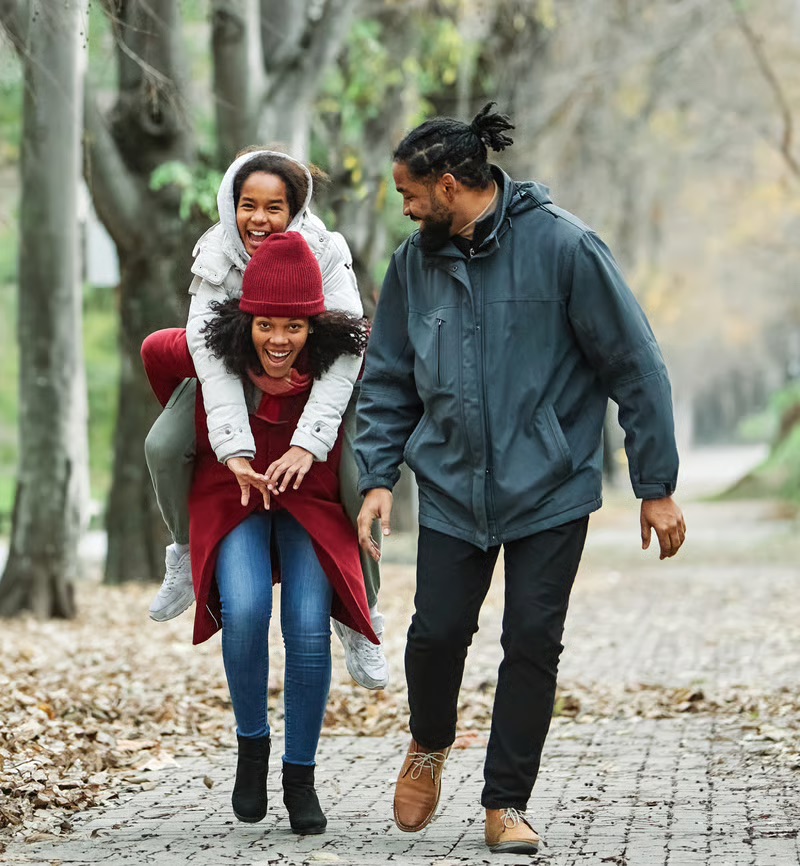
When my children were young, we hosted porch happy hours that brought our whole block together. Our front steps, perched at the top of our neighborhood hill, became a gathering place where the kids played freely, and the adults reconnected after long days. We walked our pit bull, Lulu, through the neighborhood, and those loops taught my kids to notice the small seasonal changes that mark the turning of a year. All it required was a place to sit and a reason to be outside together.
A threshold space works because it lowers the bar. You can step into it in your slippers. If you want to make yours more joyful, start with a few simple moves:
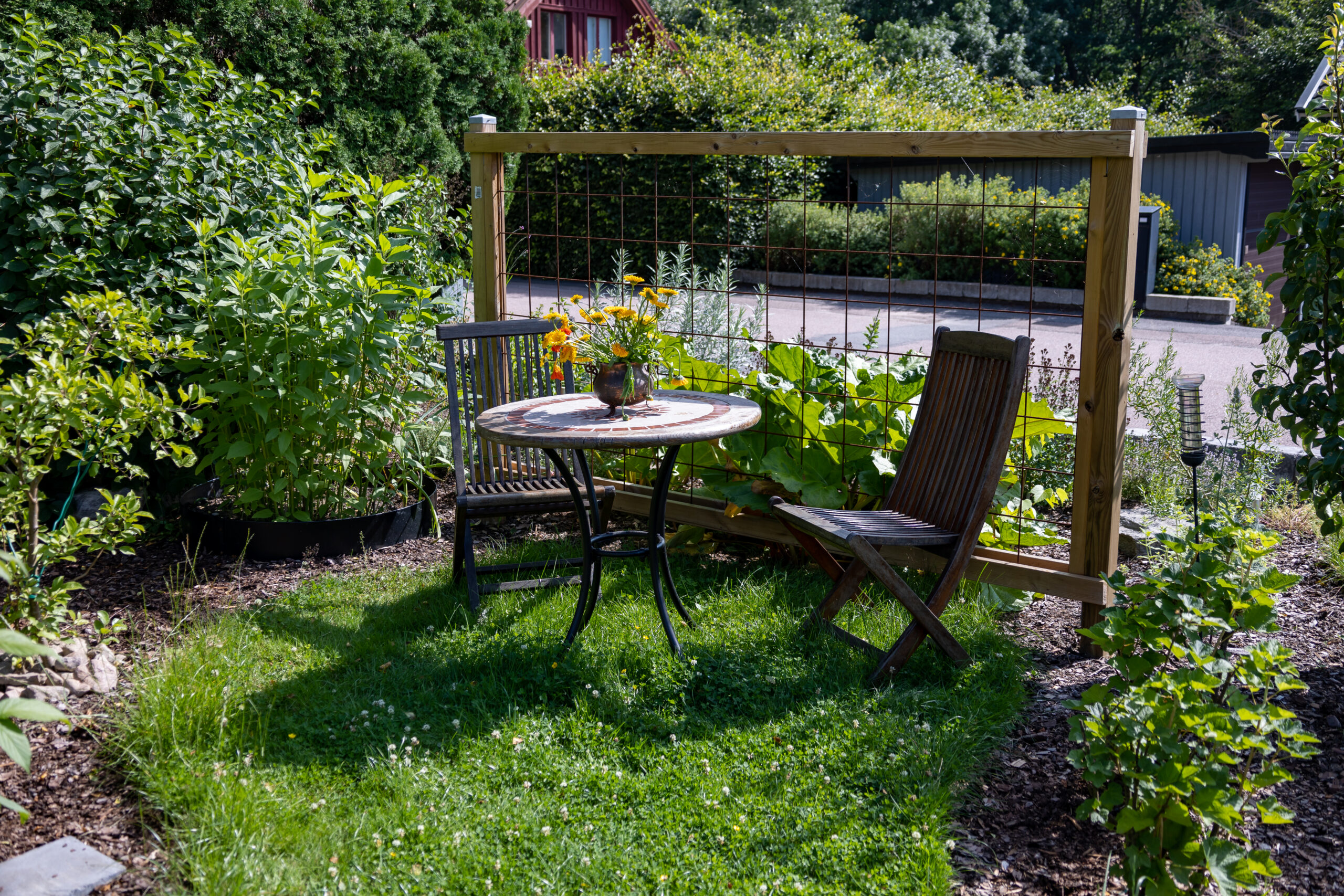
- Put out a chair you actually want to sit in. Comfort is its own invitation. No porch or balcony? A lightweight folding chair or blanket carried to the park turns any patch of grass into your spot.
- Add something living: a pot of rosemary or mint, a hanging fern, a small bird feeder where your building allows it.
- Give it light for the evenings. As October days shorten, a string of warm lights or a lantern stretches the hours you can spend outside.
These are small things. Small things add up to a place you return to, and returning is where the benefit lives.
Make the Park Your Porch
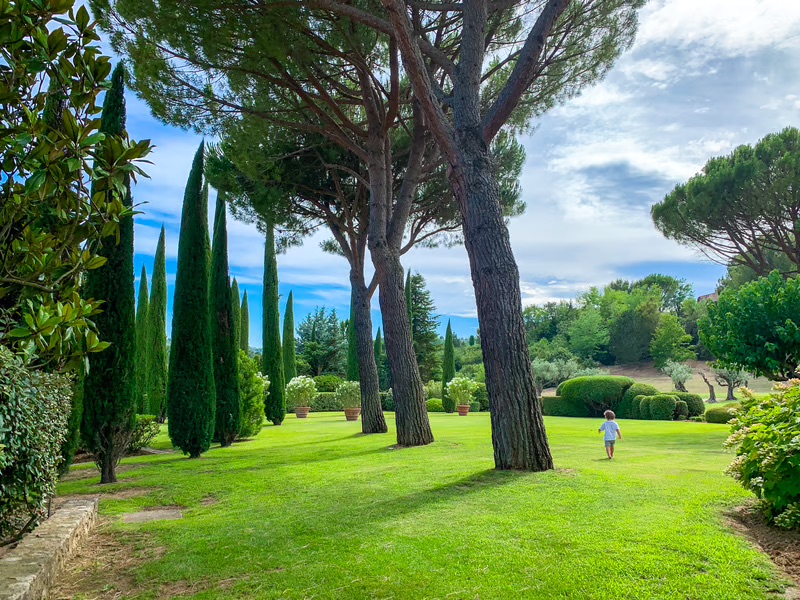
For many of my neighbors over the years, and for many of you reading this, the public park is the backyard. When I lived in Oakland, my family leaned on our East Bay Regional Parks and on Lake Merritt, where we could walk, kayak, birdwatch, and have cookouts with friends. The redwoods in the Oakland Hills were our retreat on warm afternoons. We treated those places as an extension of home.
In my book Nature Swagger, the photographer and birder Dudley Edmondson reminds readers that public land belongs to the public. When you stand in a park, every tree, blade of grass, and body of water there is, in a real way, yours. I love that reminder, because making a public space joyfully yours starts with claiming it through habit and care:
- Pick your bench. Choose one spot in a nearby park and return to it at the same time each week. Familiarity is what turns a public place into a personal one.
- Bring the comforts of home. A thermos of coffee or tea, a blanket, a field guide, or a free bird identification app. You set the mood.
- Learn its seasons. Notice which trees turn first in October, where the ducks gather, and when the light hits the water. Knowing a place well creates a bond.
- Gather people there. Host a potluck, a walk, or a birthday under the trees. Many parks let you reserve picnic areas, and a shared table changes how a space feels.
- Choose what you can reach. If the big regional park is a long bus ride away, a tree-lined street, a riverside path, a schoolyard or church grounds open to the public, or a cemetery garden where walking is welcome can do the same work. Close and frequent counts for more than grand and rare.
- Look for access that fits your body. If mobility is a concern, seek out parks with paved loops, benches along the path, and restrooms nearby. Many park agencies list accessible trails on their websites. You can also filter for paved and wheelchair friendly trails on apps like AllTrails.
A Garden Gives You Something to Tend
I call my garden a snack garden. It’s right-sized for my busy lifestyle, and intentional: some peppers in a raised bed, cherry tomatoes in the corner, basil and mint by the back door. Its real job is to give me a reason to go outside every day and put my hands on something alive.
“A garden calls you to pay attention, check the soil, and notice what the birds got to first! It pulls your focus out of your head and into your hands and the texture of soil. Gardens, of any size, reward you with small wins you eventually see and taste.”
October is a wonderful month to begin, which surprises people. In many parts of the country, fall is the time to plant garlic for next summer, sow cool-season greens, and tuck bulbs into the ground for spring. Collard greens, a staple of my family’s table, are a cool-season crop that grows best in spring and fall. On our ranch, we grew them in compost-rich beds, and the Lake County sun gave us the biggest, sturdiest leaves you ever did see. Planting something in the fall is an act of faith in the coming season, and I find that deeply steadying when the days are getting shorter.
You can garden at almost any scale. A few containers on a sunny windowsill or balcony will grow herbs and greens. Many cities and park districts offer community garden plots, and many community gardens and parks welcome volunteers for fall planting days, where the tools, soil, and good company are included. Start with whatever growing space you have.
Let Living Things In
Some of the most joyful outdoor spaces I know are full of wildlife.
Our backyard chickens and rabbits were a huge part of my children’s childhood, teaching them responsibility and care for living things. While the children have flown, chickens are still part of mornings with my husband, and their strutting and scratching are among the most enjoyable scenes to witness.
Animals keep us present. They need what they need, when they need it, and they have no interest in our deadlines. My mustang mare, True Haven, reminds me of this every time I go to the barn. She came from the Twin Peaks Herd Management Area in the high desert along the California-Nevada line, and she reads every shift in my body. If I walk up to her carrying the weight of a long day, she knows. So I’ve learned to slow down and breathe deeply through my belly before I pick up the lead rope. As prey animals, horses require consistency and calm, and in giving them that, I find I have given it to myself.
You can invite that same presence into almost any outdoor space. On a balcony or in a yard, a bird feeder and a shallow dish of water will bring a daily parade of visitors. In a public park, the animals are already there waiting for you to notice them. Sit by the pond long enough, and you will learn the habits of the resident ducks. Watch the squirrels bury acorns. Open a bird identification app and see how many species you can name by the end of the month. October is a wonderful time to start, with fall migration moving birds from Alaska and Canada through parks and green spaces all across our country’s flyways.
Happiness Grows in Shared Spaces
Private spaces restore us. Shared outdoor spaces restore whole communities.
When I think about the outdoor places that have held my family through hard seasons and happy ones, I think about Jack and Jill Family Camp in the Mendocino redwoods, where Black families have gathered for decades for talent shows and gumbo nights, and Oakland’s Feather River Family Camp, where I brought my children from infancy through their school years. Those camps were designed around fellowship. The shared meals, open fields, and campfire circle all said the same thing: stay awhile.
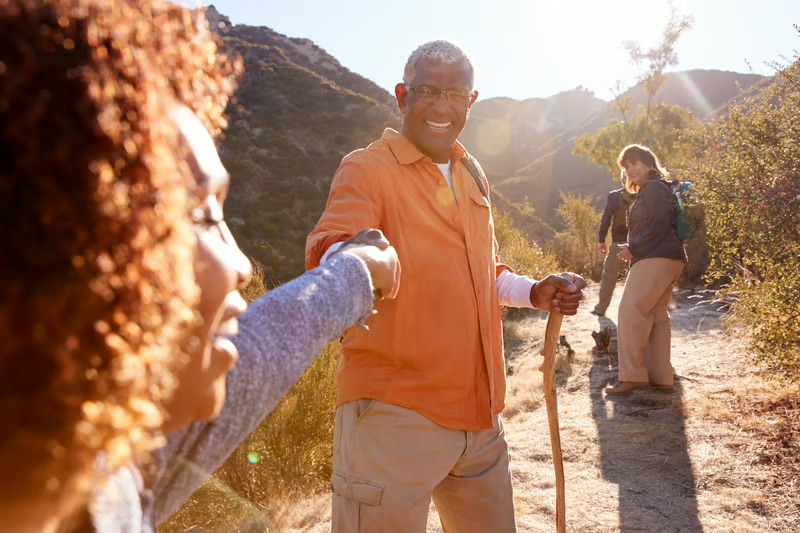
Outdoor Afro has always understood this. In 2014, when our country was carrying enormous grief and tension, I invited friends and partners to join me in the redwoods for what became our first Healing Hike. About thirty people came. We gathered in a meadow for breathing and stretching, then walked together until the tension started sliding off our shoulders and gave way to easy laughter. Our volunteers across the country carry that work forward today, leading outdoor experiences that make room for joy and healing in city parks, on trails, and by the water, often in places that are close to home.
Every town has the raw material for spaces like these. If your local park needs shade, seating, or better lighting, tell your parks department, show up at the planning meeting, or join a friends-of-the-park group. Parks get better when neighbors speak up and invest in them.
Black families built some of America’s most joyful outdoor places, from Idlewild in Michigan to Oak Bluffs on Martha’s Vineyard and Lincoln Hills in Colorado. That spirit lives on every time someone sets up a folding table at the park and calls out, come on over.
A Few Ways to Begin This October
- Claim one spot. Choose one outdoor place you can reach easily (a porch, a balcony, a park bench, a tree on your daily walk) and visit it as often as you can this month.
- Go often, even briefly. A few minutes most days build the habit faster than one long outing a month.
- Plant something for spring. Garlic, bulbs, or a pot of winter greens on a windowsill, a balcony, or a community garden plot will give you a reason to check in daily.
- Give back to a shared space. Many parks welcome volunteers for fall planting and cleanup days. Caring for a place is one of the fastest ways to fall in love with it.
Come Outside and Stay Awhile
“Our mental health is shaped by many things, and a park bench or a garden bed cannot carry the whole load. What I do know is that the places we build and claim around ourselves can either pull us outside or keep us in. We get to choose.”
My father chose to make land that invited people to linger. The Volunteers who lead Outdoor Afro outings choose it every weekend. Each of us can choose it too, one chair, one pot of greens, one park bench at a time.
So this October, as the light turns gold and the air sharpens, I hope you’ll step outside and look at the spaces around you, yours and ours, with fresh eyes. Ask yourself what would make you want to stay. Then make it. And when it’s ready, invite someone to join you.
I’ll be out back with Boogie and the chickens, coffee in hand, watching the morning come up.
Frequently Asked Questions (FAQs)
1. How does spending time in nature improve mental health?
Spending time in nature can help reduce stress, encourage relaxation, and support emotional well-being. Research suggests that walking in natural environments can reduce repetitive negative thinking associated with depression. Whether you’re gardening, walking through a neighborhood park, or enjoying your backyard, regular time outdoors can create opportunities to slow down, reflect, and reconnect with your surroundings.
2. Why are parks and green spaces important for community mental health?
Public parks and green spaces provide accessible places for recreation, relaxation, and social connection. Research has linked improvements to urban green spaces with reductions in reported feelings of depression among nearby residents. Beyond individual well-being, shared outdoor spaces help strengthen neighborhoods by bringing people together and creating opportunities for community gatherings, outdoor activities, and environmental stewardship.
3. How can I create a relaxing outdoor space at home on a budget?
Creating a peaceful outdoor space doesn’t require a large backyard or expensive landscaping. Start with a comfortable chair, a few potted plants, and simple lighting to make a porch, balcony, or small patio more inviting. Even a windowsill garden or a favorite spot in a nearby park can become a place for daily relaxation. The goal is to create an accessible space you’ll genuinely enjoy returning to.
4. What are the mental health benefits of gardening?
Gardening offers opportunities for physical activity, mindfulness, creativity, and a sense of accomplishment. Tending plants encourages patience and helps people focus on the present moment while building a connection with nature. Whether you’re growing vegetables in raised beds, maintaining a container garden, or volunteering at a community garden, the experience can support emotional well-being and provide a rewarding daily routine.
5. How can I connect with nature if I don’t have a backyard or access to large parks?
You don’t need a private yard or nearby wilderness to experience the benefits of nature. Neighborhood parks, community gardens, public courtyards, tree-lined streets, and accessible walking paths all offer opportunities to spend time outdoors. Organizations like Outdoor Afro also create welcoming community experiences through group hikes, park visits, and other outdoor activities that help people build connections with nature and one another.