What if the places that shape our lives are the ones we least expect? For many people, a garden is where a lifelong relationship with nature begins. In this personal reflection, the author shares how family gardens, the Gardens of Lake Merritt, and a keynote address at the American Public Gardens Association conference revealed the lasting impact that public gardens have on leadership, community, and conservation.
From childhood memories of growing food to mentoring, environmental stewardship, and Outdoor Afro’s work across the country, the article explores how gardens cultivate more than plants—they cultivate belonging, curiosity, and future generations of environmental leaders. Public gardens are not simply beautiful spaces; they are gateways to nature that can shape lives for decades.
Earlier this summer, I stood before a room full of public garden professionals convened from around the country in San Francisco and realized, somewhere in the middle of talking about collard greens and family memory, that gardens have been present at nearly every turning point of my life.
I was there as the keynote speaker for the American Public Gardens Association conference. The invitation asked me to speak about what gardens mean to me and to Outdoor Afro’s work, and I said yes immediately. Gardens are something I know deeply and personally, in a way that goes back long before any title or organizational work. What I didn’t entirely anticipate was that the experience would also bring one of the most meaningful full-circle moments of my professional life. More on that in a moment.
I started my keynote with an image of collard greens growing in my backyard. To some people, that’s simply a vegetable. To me, it’s memory. It’s culture. It’s family. Before I knew anything about public lands, conservation, or environmental leadership, I knew about food coming from the ground and becoming a signature dish at a family celebration. That’s where my relationship with nature actually began. In a garden, not at a trailhead.
For many of us, that’s where it starts. The garden is the first place where nature becomes personal: where you touch the soil, watch something grow from seed, and learn that what you tend comes back to feed you. It’s intimate in a way that a trail or a park can take years to become. That intimacy is what I wanted the room full of garden professionals to understand: they’re growing the conditions under which people fall in love with the living world, one plant at a time.
Where It Began
I grew up in Oakland, California, but my family also had a hobby farm in Lake County north of the Bay Area. We called it Big Oak. Fourteen acres of walnut and oak trees, a barn, a bountiful vegetable garden, fruit vines, and trees that were heavy with produce in summer. My father built it and tended it with a seriousness and a pride that I absorbed without knowing I was absorbing it.
Nature at Big Oak was woven through daily life: fruit trees, grapevines, flower beds, and vegetables spotted almost a mile off Morgan Valley Road on our drive up. The smell of soil after rain and the way the garden changed week by week, if you paid attention. Looking back, those early experiences taught me something I now say as often as I can: you care for what you know intimately, and you protect what you love.
“Many Black families carry a version of this story. Our relationship with land and growing things stretches across generations and is full of tremendous knowledge and agency. Skills passed from grandparents to parents to children: how to read the soil, when to plant, how to put up the summer harvest for the cold months ahead to enjoy year-round. The garden is where so many of those relationships begin.”
The Gardens of Lake Merritt
When I was a teenager, I had my first job through the City of Oakland Mayor’s Summer Job Program. It placed me at the Gardens of Lake Merritt, doing plant maintenance and restoration work under the supervision of a woman named Tora Rocha.
Tora was energetic and exacting, and she took the work seriously. The Gardens of Lake Merritt are remarkable in their range: a Japanese garden, a bonsai garden, a rhododendron garden, a palm garden, a sensory garden, a pollinator garden, a succulent garden, an edible garden, and more. I spent that summer doing general plant maintenance across those grounds, learning to pay attention to what each space needed. Tora oversaw all of it with the kind of steady, practiced authority that comes from knowing a place well. I was a teenager doing a summer job, and I left with more than I arrived with.
Years later, I still come back to the Gardens of Lake Merritt. I meet friends and colleagues there. I walk the grounds when I need to think. Sometimes, a walking meeting in a garden produces better ideas than any conference room ever could. The place is woven into how I work and think, and I believe that’s because of what I learned there as a teenager: that a garden can become part of how you gather, how you connect, and how you belong to a place.
At the APGA conference, I recognized Tora Rocha from the stage. She was in the audience, a professional who had given decades to public garden work. I hadn’t seen her in years. I spoke her name into the microphone and told the room of public garden professionals what she had done for me as a young person, how she had given me my first experience of meaningful outdoor work that had shaped everything that came after.
It was one of the most beautiful moments I have had as a speaker. It was a reminder that the relationships we build in gardens can last a lifetime, that the investment a garden professional makes in a young person working alongside them is the work itself. The plants are the medium. The people are the point.
What a Garden Teaches
One of the things I love most about gardening is what it demands of you.
Gardens invite observation. Patience. Curiosity. In a world that moves faster and feels more disconnected by the day, a garden is a place where attention and intention still matter. You can’t rush a seedling. You can’t skip ahead to the harvest. You have to show up consistently and with care, and trust that the work you’re doing now is building toward something you can’t fully see yet.
During the pandemic, my backyard garden became essential in a way I hadn’t expected. At a time when so much of the world felt closed, the garden remained open. It became a place of refuge, prayer, and focused work. It reminded me that life continues to unfold season by season, even during periods of deep uncertainty. Tending plants at that moment gave me something essential: agency. I could water. I could weed. I could plant. I could nurture growth. Sometimes the smallest acts of stewardship help us navigate the biggest challenges.
My garden is, as I told the APGA audience, my living room without walls. It’s where I go to rest, reflect, and find the kind of clarity that comes from physical work in a living space. And Boogie, my dog, serves as the garden’s supervisor: patrolling the beds, investigating every new addition, presiding over the whole enterprise with the seriousness she brings to all of her responsibilities. Her presence in the garden is part of what makes it feel alive in every season.
Gardens as Gateway
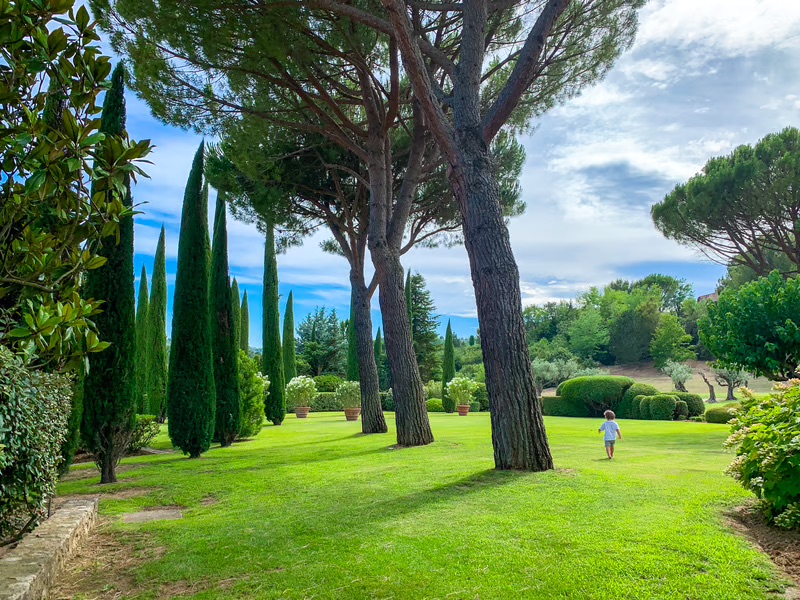
One of the most important ideas I wanted to leave with the American Public Gardens Association audience was this: for many people, a public garden gate is exactly where the relationship with nature begins. The APGA community represents an extraordinary range of garden types: botanical gardens, arboretums, Japanese gardens, and more, as well as community food gardens and working farms. Each type of garden draws people in differently. What they share is the power to make beauty and the living world accessible to anyone who walks through the gate, with no special gear required and no prior experience assumed.
Outdoor Afro has visited community gardens and public green spaces across the country for years. In food gardens, people grow relationships alongside the vegetables: teaching skills, sharing cultural knowledge, building the kind of leadership that comes from caring for something together. In botanical gardens and arboreta, we have watched participants slow down, look closely, and discover a curiosity they didn’t know they had. In sensory gardens and pollinator meadows, we’ve seen children move through space in ways no classroom can. The specific garden matters less than the fact of being in it. Connection happens in all of them.
Among the partners I spoke about at APGA was Pandora Thomas, the founder of EARTHseed Permaculture Center and Farm, a fourteen-acre solar-powered organic farm and orchard in Sonoma County, California, rooted in Afro-Indigenous permaculture principles. Outdoor Afro has hosted u-pick events at EARTHseed over the years. Every single one has produced something you can’t engineer into an event: the moment when a person who has never picked food from a plant does it for the first time, and something shifts in how they understand where food comes from and who has always tended the land that grows it. Pandora and EARTHseed remind us that agriculture, stewardship, and environmental leadership have always been part of Black history, and that the skills we need for the future are rooted in knowledge passed down and practiced across generations.
“Children are naturally curious about growing things. The real question is whether we create enough opportunities for them to find their specific joy in it. Every seed a child plants is an act of hope and an act of relationship: between the child and the soil, between the child and the person who helped them plant it, between the child and the living world that seed belongs to. Public gardens are among the best places in the country for exactly this kind of beginning.”
The Long View
Speaking at APGA, I shared three things that years of Outdoor Afro work have taught me. The first is that relevance matters: people engage when nature connects to their real lives, their families, their traditions, and their aspirations. The second is that leadership matters: people stay involved when they have opportunities to learn and contribute, to be part of something rather than just spectators. And the third is that the long view matters.
“Gardens teach us something our instant-gratification culture often forgets: some of the most important work we do today may not reveal its full impact for years.”
I think of Tora Rocha planting that knowledge in me during a summer job as a teenager. She couldn’t have known that the young teen doing plant restoration at Lake Merritt would one day stand before a national audience of garden professionals and name her as the person who first showed her what a garden could be. That’s the long view in action. It’s planting trees whose shade we may never sit under, and trusting that the growth is happening even when we can’t see it yet.
Every garden professional in that San Francisco room understood this. It’s the fundamental faith of the gardener: that what you tend now is building toward something real, whether or not you’re there to witness the full flowering of it.
I closed my keynote with an image of a little girl bicycling around garden beds. It’s a photograph from my own childhood, taken of me when I was six: curious, unhurried, rooted in a living space as though it belongs to her. That girl is still inside me. Everything that came after, Outdoor Afro, conservation leadership, public service, was built on those early experiences and the people and places that nurtured them.
Which is why the work that public gardens do matters so much. Every garden you touch holds the possibility of shaping a life. The soil you tend and the young people you welcome into that work are writing a story whose next chapters you may not live to read. That’s the nature of this work, and the reason it’s worth doing with everything you have.
This summer, I hope you find a public garden near you and spend some time there. Walk the grounds. Notice what’s growing. Let the place slow you down the way gardens do when you let them. The people who tend those spaces have invested something real in them, and your presence there honors that investment. Come find us in the garden, and be sure to check out the Outdoor Afro app to learn about events and opportunities in your area.
Frequently Asked Questions (FAQs)
1. Why are public gardens important for connecting people with nature?
Public gardens are often a person’s first meaningful experience with nature. They provide welcoming, accessible spaces where people of all ages can explore plants, learn about the environment, and develop a lifelong appreciation for the natural world, without needing special skills or equipment.
2. How can gardening improve mental health and well-being?
Gardening encourages mindfulness, patience, and a sense of purpose. Spending time tending plants can reduce stress, offer moments of reflection, and foster agency during challenging times. Many people find that working in a garden offers both emotional restoration and a deeper connection to the rhythms of nature.
3. How does Outdoor Afro use gardens to build community?
Outdoor Afro partners with community gardens, botanical gardens, arboretums, and urban green spaces to create opportunities for people to connect through food, culture, environmental education, and shared stewardship. These experiences help strengthen the community while making nature more accessible and welcoming for everyone.
4. Why are gardens important in Black history and culture?
Gardens have long been places of nourishment, cultural preservation, and intergenerational learning in Black communities. Gardening traditions have helped families pass down agricultural knowledge, strengthen community ties, celebrate heritage, and maintain lasting connections to the land across generations.
5. How can I find public gardens and outdoor events near me?
Many cities have botanical gardens, arboretums, community gardens, and public green spaces that welcome visitors year-round. You can also discover guided hikes, garden visits, volunteer opportunities, and community events through the Outdoor Afro app, making it easy to explore nature while connecting with others in your area.