What if one of the most enduring traditions in Black American history begins at the water’s edge? Fishing has long been more than a recreational activity for Black families. It is a tradition rooted in resilience, community, cultural heritage, and the passing of knowledge from one generation to the next. From family fish fries and Gullah Geechee fishing traditions to modern Black anglers expanding representation in the outdoors, this article explores how fishing has shaped relationships with both water and one another.
Beyond celebrating history, the article highlights the importance of conservation, healthy waterways, and increasing access to outdoor recreation so these traditions can continue to thrive. Whether you’re returning to a favorite fishing spot or casting a line for the very first time, every trip to the water is an opportunity to reconnect with family, embrace Black outdoor heritage, and become part of a legacy that has endured for generations.
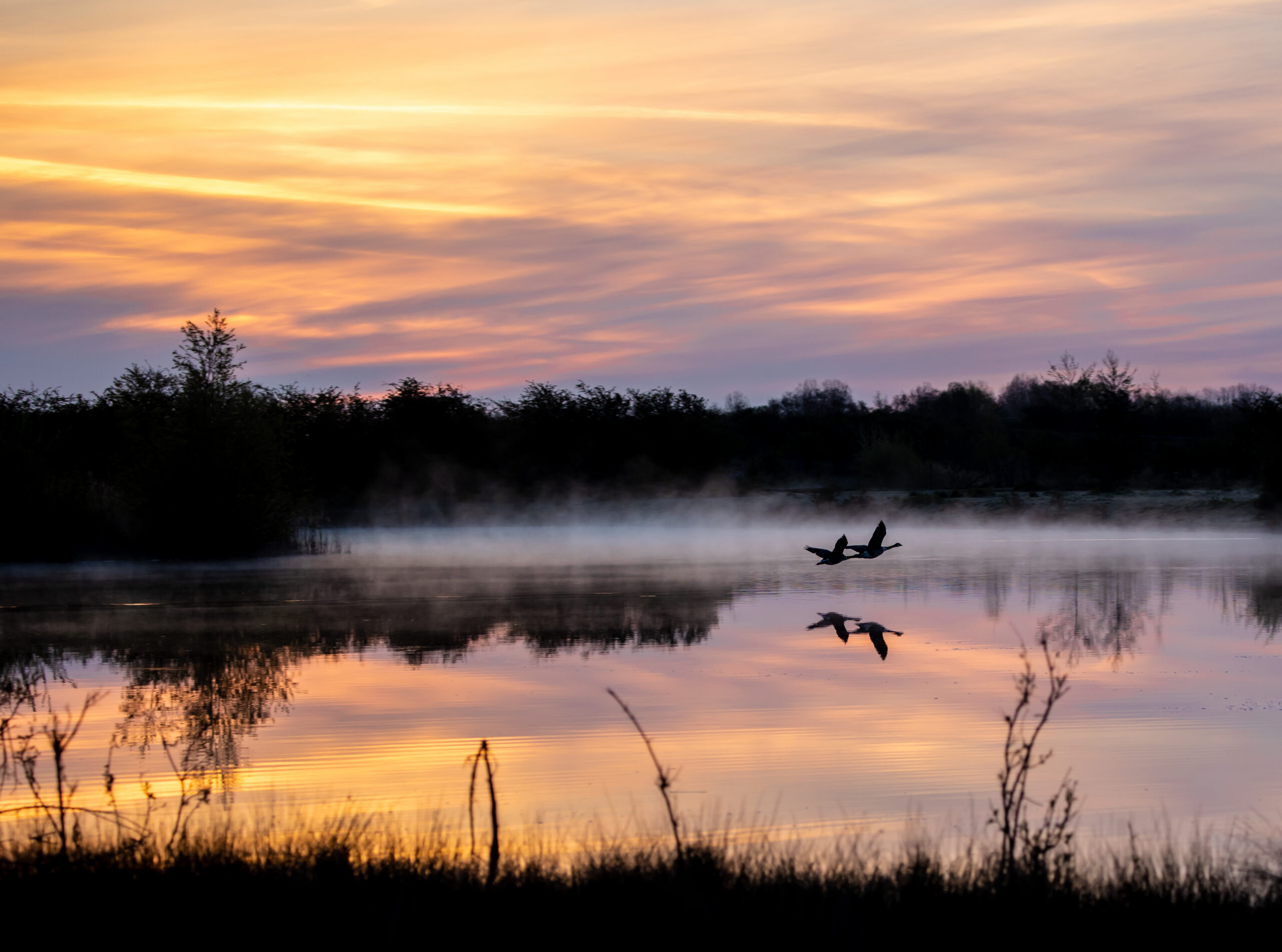
There’s a particular quality of light that comes off still water at the start of the warm season, before the sun has climbed high enough to flatten it. If you’ve ever fished first thing in the morning, you know that light. You know the way mist sits on the surface. The sound the line makes cutting through the air. The particular patience the water asks of you before it gives anything back.
May is one of the finest fishing months across most of the country. Bass are active and moving shallow as they approach their spawning season. Crappie are biting in the shallows of lakes across the South and Midwest. Trout season is in full swing in rivers and stocked lakes from Appalachia to the Pacific Northwest. The water is warm enough to be comfortable and cool enough that fish haven’t retreated to depth. If you have been thinking about picking up a rod, or picking one up again, this is the month.
But it’s not the only month in the spring and summer seasons when the fish are active. The rest of the calendar is also ripe with opportunities to get out on the water.
And if you’re Black, there is a good chance fishing has been part of your family longer than anyone ever named it.
Where This Tradition Comes From
Black fishing heritage in America runs very deep. During the period of enslavement, fishing was a critical way for people to supplement the food supply on farms and plantations, a skill that required knowledge of the water, the seasons, the behavior of fish, and the best times of day and year to cast. That knowledge wasn’t incidental. It was essential and was treated as such.
After Emancipation, Black families continued fishing for sustenance and income. Along the rivers and bays of the South, Black fishermen worked the water commercially and recreationally. In coastal communities in Georgia, South Carolina, and Florida, the Gullah Geechee tradition of fishing and shellfish gathering carried centuries of expertise passed through generations. Black families fished together on Sundays and holidays, brought their catch home, and turned it into something that was as much about gathering as it was about food.
TakeMeFishing.org has documented the depth of Black fishing heritage in America, tracing traditions that reach back to the earliest years of the country and continue through families who have kept fishing central to their outdoor and domestic life. The fishing knowledge in Black communities was never a small thing. It was a form of expertise, food sovereignty, and a relationship with land and water that couldn’t be taken away.
That knowledge moved across the country as Black families moved. North during the Great Migration. West during the postwar decades. Into new cities and new waterways, where the same traditions of fishing, cleaning, cooking, and sharing the catch were adapted to new geographies. The tradition was portable because the knowledge was in the people.
The Fish Fry as Community
I want to talk about the fish fry.
Not just the meal itself, but what it represents. The fish fry is one of the oldest community rituals in Black American culture. You catch something. You clean it. You fry it in a cast-iron skillet or a deep pot, dredged in cornmeal and seasoning, and skilled timing that was learned by watching someone who learned it by watching someone. You set it out on a long table. People arrive. More people arrive. Someone brings coleslaw. Someone brings sliced bread, potato salad, greens, or anything else, but the fish is the star of the show. Children run around the edges. Elders take the seats with the best shade.
“In my book “Nature Swagger,” Virgil Baker describes the weekend campouts he rode with in the Bay Area, gatherings that included long trail rides on Saturday and a fish fry on Friday night. That pairing, the ride and the fry, the outdoor activity and the shared meal, wasn’t incidental. It was the point.”
The fish fry was how the community marked itself, welcomed newcomers, and affirmed that the gathering was worth the pursuit and wait.
That pattern, outdoor activity followed by a shared meal built around something caught or grown nearby, runs through Black community life in ways that go back generations. The fish fry is hospitality. It’s skill. It’s a way of saying to the people around you: this is what we know how to do, and we’re glad you’re here.
What Water Teaches
Clear Lake is one of the oldest natural lakes in North America. It sits in the Coastal Range of Northern California, about 6 miles from our family ranch in Lake County. I fished that lake since I was three, and it set the standard for recreational fishing that remains with me to this day. The wide, flat surface of it in the morning. The sound of coots out on the water. The patience you build when nothing is biting except the mosquitoes, and how that patience becomes its own kind of attention.
“Fishing teaches you to read a place. Where fish hold in different seasons, at different water temperatures, and at different times of day. What the surface tells you about what’s happening underneath. How wind direction matters. How a shadow crossing the water changes everything. That kind of reading takes time, and it builds a relationship with a specific body of water that’s unlike any other outdoor knowledge I know.”
There’s something about sitting at the edge of water that quiets the mind in ways other outdoor activities don’t quite replicate. The water keeps moving, keeps working, keeps offering something just beyond your grasp. It asks for presence without demanding performance. You can be a beginner at the edge of a lake for years, and the lake will still give you something worth having.
Conservation and the Future of Good Fishing
Good fishing requires healthy water. The connection is direct: fish need clean rivers and lakes with stable temperatures, adequate oxygen, and intact habitat. When those conditions degrade, the fish go first, and the traditions built around them follow.
The Theodore Roosevelt Conservation Partnership has been working on exactly this issue across multiple ecosystems. Their recent reporting on preventing the decline of a top Louisiana fishery highlights the kind of specific, place-based conservation work that keeps fisheries viable for communities year after year. It’s the kind of work that happens largely out of view but makes the difference between a thriving waterway and one that has been fished out or polluted past recovery.
Fishing licenses are part of this system, too. In most states, license fees go directly to fish and wildlife agencies that manage habitat, conduct surveys, stock lakes, and monitor water quality. When you buy a fishing license, you are investing in the future of the fishery. That’s a direct and practical form of conservation stewardship, immediate and tangible.
The waterways that Black families have fished for generations, the rivers and bays and lakes that became part of community tradition, deserve that investment. And the people who fish them are already practicing stewardship every time they cast.
Black Anglers Carrying It Forward
The tradition of Black fishing heritage is alive in contemporary anglers who have made it central to their public identities.
Rhonda Harper, founder of Big Water Adventures, became the first African American woman to fish all five of the world’s oceans. Her accomplishment required skill, planning, and a commitment to the craft that put the Black fishing tradition on a global stage, it was always part of but rarely credited for. Harper has spent years advocating for Black representation in fishing culture and for making the sport accessible to communities that have been left out of mainstream fishing media and events.
Brian Latimer, a fishing guide, content creator, and tournament angler, has built a significant audience by documenting bass fishing at a high level while speaking openly about being Black in a sport where Black anglers aren’t typically amplified in marketing and media. These anglers aren’t building something from scratch. They’re making visible something that has been there all along.
“Their work matters because representation in the fishing world shapes who feels welcome at the water. When Black anglers are visible, when their expertise is acknowledged, and their stories are told, it sends a signal to every Black kid who grew up with a grandparent who fished: this tradition belongs to you. It always has.”
Water Access and Making Waves
One of the things that shapes who fishes, who swims, and who feels at ease near water is simple access. For generations, exclusion from public pools and beaches, rooted in policies that kept Black Americans out of recreational water during segregation, created a gap in water experience that has outlasted the policies themselves.
Outdoor Afro’s Making Waves program addresses this directly. We cover the cost of beginner swim lessons for children, adults, and families across the country, because comfort and competence in the water is a prerequisite for everything else that happens near it: fishing, kayaking, canoeing, and boating.
Black families have fished, worked, and gathered near water for generations. Making Waves is about making sure comfort and safety in the water match that history, one new swimmer at a time. Our goal is to fund lessons for 250,000 new swimmers by 2030.
Getting Out There This Season
Now is an ideal time to start fishing or to return to it. The weather is comfortable, the water is warming, and the fish are active. You don’t need much to begin.
A basic spinning rod and reel, available at most sporting goods stores or secondhand shops for under fifty dollars. A fishing license, which you can purchase online in most states for a modest fee. A few simple lures or some live bait. A body of water near you. Many state parks and public land areas offer walk-in fishing access without a boat. Lakes and ponds in city parks often hold bass, bluegill, and catfish in numbers that would surprise you.
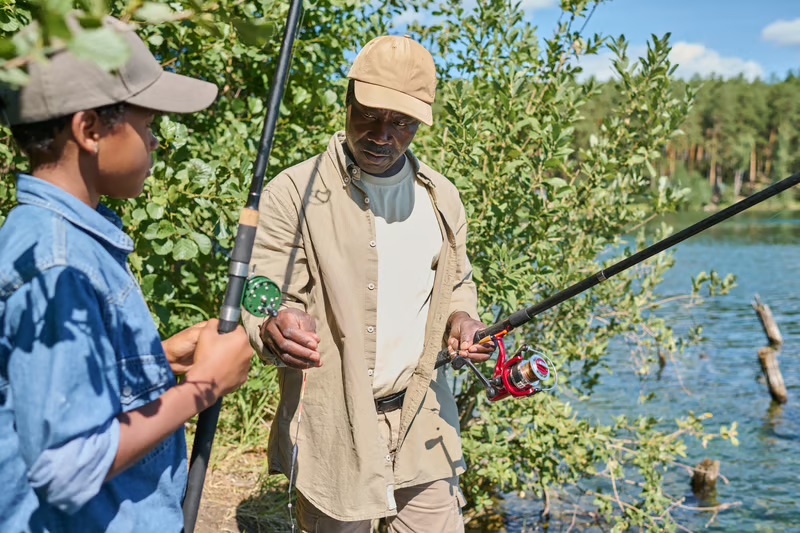
If you grew up fishing but haven’t been out in years, let this be the prompt to go back. Find the lake you remember, or a new one that a friend recommends. Bring a child if you can. The teaching is part of the tradition, and the tradition needs the next generation to carry it.
Bring something to eat. You may not catch enough for a proper fish fry on your first trip back. That is fine. Bring sandwiches, fruit, and something to drink. Sit at the edge of the water and let the morning do its work.
The water is out there. The fish are moving. And somewhere someone is standing at the edge of a lake with a coffee in one hand and a rod in the other, holding the kind of patience that was passed down from someone who knew how to read a river before the sun came up. That tradition has your name in it. All you have to do is show up.
Frequently Asked Questions (FAQs)
1. Why is fishing an important part of Black heritage?
Fishing has played a significant role in Black history as a source of food, self-sufficiency, economic opportunity, and community. Across generations, families have passed down fishing knowledge, traditions, and recipes, making it an enduring part of Black outdoor culture and family life.
2. How does fishing help preserve family traditions?
Fishing creates opportunities for families to spend quality time together while sharing skills, stories, and values. Whether it’s teaching children how to cast a line or gathering for a fish fry, these experiences help strengthen relationships and preserve traditions that can be passed on for generations.
3. Why is conservation important for future generations of anglers?
Healthy lakes, rivers, and coastal waters are essential for sustaining fish populations and protecting outdoor recreation. Practicing responsible fishing, following local regulations, and supporting conservation efforts help ensure that future generations can continue enjoying the same waters and traditions.
4. How can someone new to fishing get started?
Beginners can start by obtaining the appropriate fishing license, learning local regulations, choosing basic fishing equipment, and visiting public lakes, rivers, or community fishing programs. Joining local fishing clubs or learning from experienced anglers is also a great way to build confidence and develop new skills while connecting with the outdoors.