What does a June garden hold besides vegetables and herbs? This reflection explores how gardening connects heritage, family, and community through generations of knowledge passed from one season to the next. From tomatoes, peppers, and basil growing in backyard beds to the heirloom crops carried across the Atlantic by enslaved Africans, the garden becomes a living archive of memory, resilience, and cultural continuity.
The article traces the deep relationship between Black gardening traditions, foodways, and stewardship of the land. Through stories of family gardens, seed saving, canning, and the work of growers like Pandora Thomas, it highlights how growing food remains an act of preservation, self-reliance, and connection. Ultimately, the summer table is more than a place to eat—it is where history, harvest, and community come together, season after season.
By June, my backyard garden is fully committed. The tomato plants are taller than I planned for when I put them in, and the fruit is forming now, green and dense on the vine. The pepper plants are branching out in every direction. The basil is at its most generous and needs cutting back before it flowers and turns bitter. My chickens patrol the edges of the beds with the particular focus of animals who have decided that what grows here belongs partly to them too, and are simply waiting for the rest of the evidence.
There is a particular quality to a June garden. Everything is fully committed in a way that it wasn’t in April or May. The squash is running. The tomatoes are setting fruit. The basil has grown tall enough to harvest seriously, and if you let it go to flower, it will get ahead of you before you realize it. June asks something of the gardener: attention, regularity, a willingness to show up and see what the ground has to tell you.
“I came to gardening through family. My grandmother and the women around her kept gardens the way they kept everything else: with exactness, with care, and with the understanding that what came from the ground was a form of provision you could rely on.”
At my father’s 14-acre ranch in Lake County, California, fruit trees bore pears, plums, peaches, and apples through the summer months, and the women gathered in the kitchen to put up what the trees gave. Canning parties that stretched through long summer afternoons, jars lined up on the counter, steam from the water bath canner filling the kitchen. Those summers taught me that a garden is not a hobby. It is a practice with deep roots in community and in the long relationship between a family and its land.
Seeds Carried Across Water
The crops growing in American gardens today carry history in their DNA, whether we think about it or not.
Okra, a cornerstone of Southern American cooking, was brought to the Americas from West Africa between 1710 and 1730. Collard greens arrived through the same historical passage as did black-eyed peas, watermelon, and field peas: all of them plants familiar to the communities from which enslaved Africans were taken.
The Smithsonian’s Kaleidoscope project on African American food and horticulture documents how enslaved people were sometimes permitted small garden plots to supplement the inadequate provisions they were given. Many of them planted what they knew: the foods that connected them to home, to family, and to an agricultural tradition that predated American history. Some gardened by moonlight, after the forced labor of the day was done, because the garden represented something that belonged to them.
The knowledge they carried and passed down, what to plant, how to tend it, when to harvest, how to prepare it, was generational. It survived because it was kept alive person to person, season to season. The collards simmering in a deep pot with smoked meat. The okra in gumbo or fried crisp in the cast iron. The black-eyed peas that mark the new year with hope and luck. All of it traces back to African agricultural and culinary traditions that were carried across the ocean and kept alive through the garden, through the kitchen, and through the community table.
This history is still visible in what grows and what gets cooked. Edna Lewis, one of the most important American food writers of the 20th century, spent her career documenting the Southern kitchen and the garden traditions behind it. Her writing on seasonal cooking and preservation reflects the same generational knowledge that kept those crops alive through centuries of disruption. The understanding that you grow what is in season, you cook it the way your people cooked it, and you put up what you cannot use today for the months when the garden is bare: that is practical wisdom, earned across generations.
Seed saving is part of this tradition, too. Saving seeds from the strongest plants at the end of each season, storing them carefully through winter, planting them again in spring, is how particular varieties survive across decades and centuries. The fish pepper, a distinctively cream-and-white-striped heirloom pepper with deep roots in African American cooking around the Chesapeake Bay, was nearly lost before food historians and seed stewards worked to bring it back. The same is true of dozens of heirloom crops with deep roots in Black American culinary heritage. Saving seeds carries the full weight of what gardening means: history kept alive in the ground.
My grandmother did not use the word heritage when she talked about her garden. She talked about what the tomatoes needed, what the collards were doing, and whether the peaches were going to be early or late this year.
“The vocabulary of tradition was embedded in the practical vocabulary of tending. The knowledge was not separate from the practice. They were the same thing.”
Every spring, I choose what to put in the ground with that same attention: what we eat, what my chickens will benefit from, and what the soil is ready for this year. The tomatoes go in after the last cool nights. The peppers follow. The herbs go in early because they do not mind the cool and because I want them available from the first warm morning in April through the last days of October. The garden is a record of what I know and what I am learning, written in soil and tended season by season.
The Summer Table
What June brings to the kitchen is specific. The herbs are generous now: basil, oregano, thyme, all of them at their most aromatic before the heat pushes them to flower. The first strawberries at the farmer’s market are in their heaviest week of the season. A handful of dried hibiscus flowers steeped in hot water and poured over ice makes a drink that runs deep red and slightly tart, the kind of thing that tastes exactly right when the afternoon heat comes on.
The kitchen and the garden are in conversation with each other all summer, but June is when the conversation is most lively.
The community table is the garden’s final expression. All the planting and tending and harvesting arrive, eventually, at a gathering where people sit down to eat together. In my family, summer at the Lake County ranch meant long afternoons with the women putting up what the fruit trees gave: canning parties that stretched through the heat of the day, jars lined up on the counter, the kitchen smelling of sugar and fruit and hot lids. The meal at the end of the day was the point, but the work behind it was the deeper point. The table was where the garden’s effort became community.
This understanding runs through Black American food culture with a consistency that spans regions and generations. The collards simmering in a deep pot. The okra fried crisp in cast iron. The cornbread that comes out of a pan seasoned through decades of use. These dishes graced Juneteenth tables earlier this month, as they have for generations, and they will carry the summer table all the way through September and beyond.
They are knowledge kept alive in the kitchen, passed through the practical vocabulary of what you make and how you make it, preserved the way seeds are preserved: carefully, repeatedly, with the intention that the person who comes after you will know how to use what you are keeping.
Pandora Thomas and the Living Tradition
In my book “Nature Swagger,” contributor Pandora Thomas writes about her relationship with land and growing things that goes back to childhood in a Pennsylvania steel town, where her mother’s indoor plants transformed a modest apartment into something she describes as feeling like a showroom. Her father fished at Pymatuning Reservoir. She dreamed, once, that she was an earthworm moving through soil.
Thomas went on to found EARTHseed Farm in Sonoma County, California: 14 acres of solar-powered working land grounded in Afro-Indigenous permaculture principles. Her farm is not a romantic project. It is a serious engagement with what grows, with how soil health and food sovereignty are connected, with what it means to steward land in a way that gives back more than it takes.
“Her work is the continuation of what those earlier generations of Black gardeners were doing when they planted what they knew in ground that was not fully their own.”
This work is happening in cities, too. Black urban farmers and community gardeners across the country are growing collards, okra, and sweet potatoes in lots that were vacant a few years ago. Seed preservation projects are documenting heirloom varieties and the stories that travel with them. The garden as archive. The garden as resistance. The garden as the most direct relationship you can have with the earth that sustains you.
What June Asks of the Gardener
Practically speaking, June is a demanding month in the garden. The days are longest now, and the light that feeds everything can also cook it if the soil dries out. Water in the morning or in the evening. Mulch generously to hold moisture during the heat of the day. Tomatoes want consistent moisture, or they will crack when the rain finally arrives. Squash wants to be harvested while it is still tender; left too long on the vine, it goes woody and exhausts the plant.
The summer solstice falls on June 21, the longest day of the year. In gardening terms, the solstice marks a turning point: the fullest sun, the most light, the moment when the garden is at its most energized. After the solstice, the days begin shortening, almost imperceptibly at first. Plants that have been growing toward the long days begin preparing for what comes next. The solstice is worth marking in the garden, if only because it is a reminder to pay attention to where you are in the cycle.
If you are starting a garden for the first time, June is still a workable entry point for fast-maturing crops: beans, cucumbers, summer squash, and herbs. A container garden on a balcony or porch functions the same as a ground plot at this scale. A single pot of basil on a kitchen windowsill keeps the practice alive in its smallest form, and sometimes the smallest form is where things begin.
Visit your local farmer’s market and seek out vendors who grow heirloom varieties: the fish pepper, the Cherokee Purple tomato, the yard-long bean. Ask how they grow it. Those conversations are part of how knowledge continues to move, person to person, season to season, the way it always has.
And if you can, preserve from this month’s harvest. Jam, pickled peppers, dried herbs. Preservation is part of what it means to garden with seriousness.
“You are feeding yourself today and storing something against the leaner months.”
This is exactly what Black American gardeners have done across generations, across conditions that tried to make that continuity impossible. The jar on the shelf is a small monument to that insistence.
An Invitation
This June, put something from the garden on the table and share it with someone. A bowl of tomatoes still warm from the sun. A jar of pickled peppers. A pitcher of hibiscus tea made from dried flowers you found at a market. A plate of cornbread. The act of growing something and then offering it to another person is one of the oldest forms of hospitality, and one of the most direct.
The food traditions carried forward in Black American kitchens and communities are a living archive. The seeds brought across the ocean and planted in whatever ground was available. The recipes memorized and repeated across generations. The knowledge passed from grandmothers, mothers, and aunts who understood that growing food and knowing how to cook it was a form of continuity that belonged to them and that they could give to the people who came after. Every summer table built on that inheritance is one more instance of the garden doing its real work.
The garden does not forget. And neither do we.
Frequently Asked Questions (FAQs)
1. Why is family gardening important?
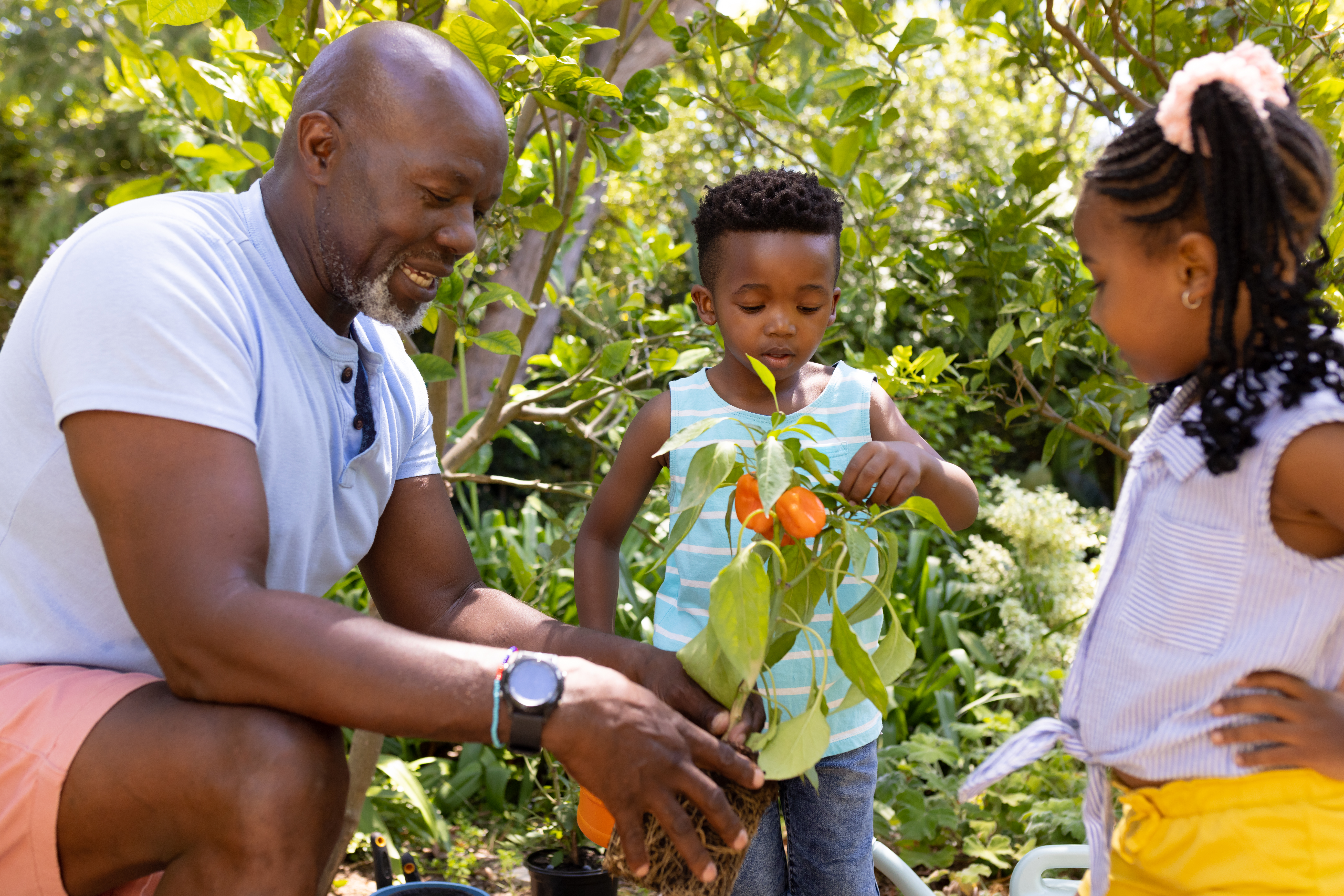
Family gardening helps strengthen relationships while teaching valuable life skills. Working together in the garden encourages teamwork, responsibility, patience, and a deeper appreciation for where food comes from. It also creates meaningful opportunities for families to connect across generations.
2. How can gardening help children learn?
Gardening provides hands-on lessons in science, nutrition, and environmental stewardship. Children learn how plants grow, understand the importance of healthy eating, and develop problem-solving skills through real-world experiences. It also encourages curiosity and outdoor exploration.
3. What are the best vegetables for families to grow together?
Easy-to-grow vegetables like tomatoes, peppers, lettuce, green beans, cucumbers, and carrots are great choices for family gardens. These crops are beginner-friendly, produce rewarding harvests, and help keep children engaged throughout the growing season.
4. How does gardening help preserve family traditions and heritage?
Gardening allows families to pass down knowledge, stories, recipes, and cultural traditions from one generation to the next. Growing favorite crops or heirloom varieties can connect children to their family history while creating lasting memories rooted in the outdoors.