What makes Memorial Day outdoor traditions feel so meaningful year after year? This article explores how gathering outdoors has long connected Black families through camping, public lands, storytelling, and shared experiences in nature. From childhood memories of family camps to historic destinations like Idlewild and Oak Bluffs, the piece reflects on the deeper role outdoor spaces play in community and belonging.
It also highlights the legacy of the Buffalo Soldiers, the importance of protecting public lands like the Boundary Waters, and the value of finding a “home place” outdoors that families return to across generations. Rather than just celebrating the start of summer, the article invites readers to think about stewardship, memory, and why these landscapes continue to matter today.
The last Monday of May belongs to the outdoors.
Memorial Day weekend has always carried a particular feeling. The signal that summer is finally beginning. The smell of smoke from a grill. The sound of people arriving and children spilling out of cars before they have fully stopped. Long outdoor days with the light staying well into the evening. Something in the body relaxes that had been held since October.
This year, Memorial Day falls on May 25. Three days that sit right at the hinge between spring and summer, when the backpacking trails are finally dry, the campgrounds are opening their season, and the itch to be somewhere outdoors becomes impossible to put off any longer.
Why Have Outdoor Gatherings Always Been Central to Black Community Life?
For Black families, outdoor gatherings have always been at the center of community life. Any occasion big enough to justify the drive, the preparation, the haul of food and equipment, and folding chairs.
My childhood was full of these gatherings. Summers at Feather River Family Camp, which brought Oakland families together in the mountains for a week of hiking, swimming, and the kind of togetherness that happens when people have nowhere to be except each other’s company. Weekends at Jack and Jill Family Camp in the Mendocino redwoods, where the trees were tall enough to make a ten-year-old feel properly small. Girl Scouts introduced a different version of the same lesson: at 9 years old, it was the first time I actually camped, and I came home hooked on everything it encompassed. Even the chores were better done outdoors, in our little pop–up community.
“Those gatherings were about going somewhere together.”
The destination mattered less than the fact of arriving, setting up, and spending days in a place where the ground underfoot and the sky overhead were the organizing principle. No agenda except the meals, the light, the water, and each other.
What Makes Certain Outdoor Places Feel Like Home Across Generations?
For Black families across the country, the tradition of outdoor gathering has always centered on certain beloved places returned to year after year. Idlewild in Michigan. Oak Bluffs on Martha’s Vineyard. Lincoln Hills in Colorado. These were community anchors, places where families held reunions, where children grew up alongside the same children every summer, where the land itself became part of the family story.
The relationship between a community and a specific piece of ground builds over time into something that is hard to replace. People begin to know which trail the deer cross in August. Which beach is coolest on hot afternoons. Where to find the best fishing holes, or catch crawdads in the river. The outdoor knowledge becomes part of the community’s knowledge, passed down through repeated visits rather than explicit instruction. The place teaches you, if you come back enough times to let it.
These were not just vacation destinations. They were built on enterprise and intention. Black entrepreneurs ran inns, outfitters, restaurants, and camps in these communities. Black families bought land and built cottages. The outdoor life was life, and these places made it possible to practice that life freely, in community, across generations.
What Do the Buffalo Soldiers Have to Do With Memorial Day and Public Lands?
Memorial Day is a day of remembrance, and as we gather outdoors this month, I want to name a piece of American military history that belongs alongside any celebration of our public lands.
The Buffalo Soldiers, Black Army regiments established after the Civil War, were among the earliest official protectors of what would become our national parks. In the 1890s and early 1900s, units from the 24th Infantry and 9th and 10th Cavalry were assigned to patrol and protect Yosemite, Sequoia, and other protected areas in California. They fought wildfires, built trails, and enforced park boundaries, doing so with professionalism in a military system that gave them second-class treatment while depending entirely on their skill and commitment.
The work those soldiers did was the work of stewardship. They patrolled thousands of acres on horseback, extinguished wildfires before they could spread, and cleared the trails that hikers still walk today. They did this without recognition and, in many cases, with hostility from the surrounding communities. The land they protected became the parks and forests where families now camp, fish, hike, and gather every Memorial Day weekend. When you walk into a national park or set up a campsite in a national forest, you are in a place that was cared for by people whose names are rarely on the signs.
“Every time I step onto a trail in one of these places, I think about the people whose labor made it possible.”
The Buffalo Soldiers are part of that story. Memorial Day is the right time to hold it.
Why Do Public Lands Carry So Much Cultural and Generational Meaning?
The Boundary Waters Canoe Area Wilderness sits in northern Minnesota, more than a million acres of interconnected lakes, rivers, and boreal forest that have drawn paddlers, anglers, and families for generations. It is the most visited wilderness area in the entire country, and one of the most intact. Clean water, wild fish, and a quiet that is genuinely quiet. The kind of place that changes you if you let it.
That wilderness is facing real pressure. A proposed copper-nickel sulfide mine near the watershed has been under federal review for years, and the Campaign to Save the Boundary Waters has been doing steady work to keep the public engaged in that process. The concern is not complicated: sulfide mining produces acid drainage. Once it enters a waterway system this interconnected, the effects travel far and stay a long time. The wilderness designation that protects over a million acres does not protect the watershed that feeds it, and that is where the real vulnerability sits.
Access to public lands is part of the continuity I think about when I think about outdoor life. Families who have been canoeing into the same portage routes for thirty years. Anglers who know which lake holds walleye in June. Kids who grew up watching their parents read the water and are now old enough to paddle bow. Public lands are the places where these traditions are practiced, generation after generation. Protecting them is protecting the practice, and the generational knowledge that lives inside it.
The conservation work that keeps these lands intact, the advocacy, the stewardship, the policy attention, is the same work that makes it possible for a family to load a canoe on a Friday afternoon and head somewhere they can be completely outdoors. That matters. It has always mattered.
How Do You Find a Place Outdoors That Becomes Part of Your Story?
The most meaningful outdoor relationships I have are with places I have returned to over many years. Clear Lake. The Mendocino redwoods. The trails in the Oakland Hills. These places know me in a way a new destination never quite can.
There is something to be said for exploration, for new terrain and an expanding map of the world.
“But I want to make a case, especially as summer approaches, for finding the place you keep coming back to.”
The campground where you know which sites catch morning light. The lake where you understand the wind patterns and can read the surface. The trail that has shown you something different in every season you have walked it.
That kind of relationship with a place builds something that is hard to name but easy to feel. A knowledge that is specific and embodied and yours. When you take someone new to a place you know deeply, you become the person who holds its story for them. That is a form of generosity, a form of stewardship, and a very old way of caring for a landscape.
If you do not yet have a home place outdoors, Memorial Day weekend is a good moment to start looking for one. Go somewhere you can imagine returning to. Pay attention to what it gives you. Come back next year.
How Can You Create Meaningful Outdoor Traditions This Memorial Day?
Campsite reservations for national parks and national forests can be made at Recreation.gov. For private land camping with more flexibility and variety, HipCamp lists thousands of sites across the country, from ranch land to vineyards to working farms. Many state parks take reservations as well and often have more availability closer to the date. For holiday weekends like Memorial Day, plan well ahead, regardless of where you are booking. Spots fill faster than most people expect, and many of the best sites go first.
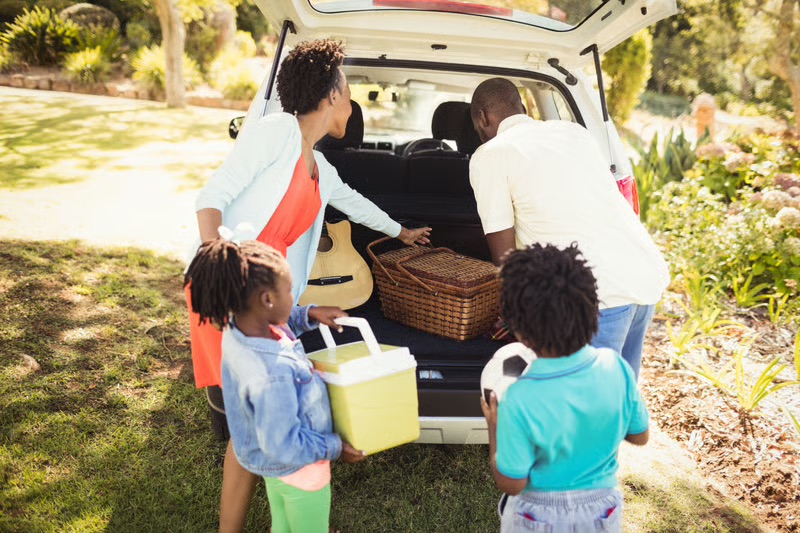
Bring your own food. This is both practical and a continuation of tradition. A cooler packed thoughtfully travels better than a plan to find somewhere along the way. Bring more than you think you need. Earlier this year, Rashad Frazier and I sat down together for a fireside chat at the San Francisco Museum of the African Diaspora, where we talked about my book, Nature Swagger. Rashad is the co-founder of Camp Yoshi, and this April, he released Cook Out: Recipes and Tips for the Great Outdoors, a book that belongs in the camp bag for anyone who takes outdoor eating seriously. That knowledge of how to feed people well in a beautiful place has been passed down in Black families for as long as we have been gathering outdoors. Rashad is carrying that tradition forward with real craft and generosity.
Bring someone who has not been before. If you know someone who has been thinking about camping, hiking, or spending a long weekend away from the city, this is the invitation. You do not need to plan an adventure. You need to find a place and show up. The place will do the rest.
What Could This Summer in Nature Make Possible?
Through Outdoor Afro, people are gathering in nature across the country all through spring and into summer. Our Volunteers lead experiences in local parks, on trails, at lakes and rivers, and in campgrounds from the Pacific Northwest to the Gulf Coast. If you want company for your first outdoor weekend of the season, or a community to belong to through the summer ahead, the Outdoor Afro app is where to find it.
Our opening circle is one of my favorite parts of every Outdoor Afro experience. We ask everyone to share their name, where they are from, and one thing they already love about being in nature. That circle changes the energy of the group in minutes. People who arrived as strangers leave as something closer to community. That is what the outdoors does when you give it enough time.
Memorial Day weekend is right there. Find your patch of ground. Load up the cooler. Bring the people you love. The summer is long, and the land is waiting. We have always gathered here. And we always will.